
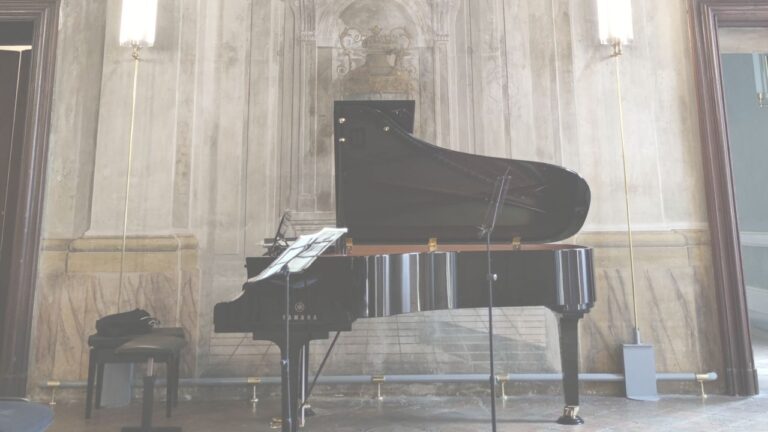
Florence Conservatory’s Violin Introductory Exam
This summer, my daughter took the violin entrance examination at the Conservatorio di Musica Luigi Cherubini (Florence Conservatory), and I’d like to share our experience. I hope it will be helpful for anyone planning to apply in the future.
The Entrance Examination
- Choose one major or minor scale
- Three contrasting études chosen by the applicant from Kreutzer, Fiorillo, Rode, and/or Dont Op. 35.
- Two contrasting movements from Bach’s Sonatas and Partitas for Solo Violin.
- One free-choice work with a duration of at least 15 minutes
- Sight-reading
- An interview
One point that may be worth clarifying is the requirement for “one free-choice work lasting at least 15 minutes.” In previous years, many applicants prepared only the first movement of a concerto, even if it was shorter than 15 minutes. During our exam session, some candidates appeared to perform shorter repertoire as well. As admission requirements can sometimes be interpreted differently or updated from year to year, I would recommend contacting the conservatory directly whenever you have questions about the repertoire requirements.
A test that allows applicants to showcase their strengths
What I especially liked was the flexibility of the repertoire
There is a clear framework, but applicants are free to choose which elements they can choose.
This allows all candidates to perform at their best
If everyone had to perform exactly the same repertoire, some musicians might be at a disadvantage because the piece didn’t fit their playing style
I felt that this exam was designed not only to assess technical abilities but also to give each student an opportunity to showcase their musicality, artistic personality, and individuality
Preparation
On exam day, the scale was decided, so my daughter prepared all the major and minor keys.
In Italy, three-octave scales are usually performed using three different bowing patterns. First, the scale is played one note per bow, using the full bow. It is then repeated using two different slurred bowings. This appears to allow the examiners to assess bow distribution, bow control, and the consistency of tone.
To prepare for the sight-reading test, a former conservatory professor recommended practicing from an orchestral studies book, as it is commonly used for conservatory entrance examinations. In our daughter’s examination, however, the sight-reading test was omitted due to time constraints.
Warm, and welc.
What impressed me most was the attitude of the examiners
Rather than creating unnecessary pressure, they spoke kindly to the candidates and created a relaxed atmosphere that allowed them to perform comfortably.
As a parent, I found this especially reassuring.
It reminded me that the purpose of the examination was not simply to test students under pressure, but to discover each candidate’s musical potential.
Be Prepared to Stay Flexible
One thing I learned is that flexibility is important on the day of the examination.
The performance order was not announced until the morning, so everyone needed to arrive early.
There was no formal waiting room, and candidates scheduled for later in the day were allowed to leave and return later.
The order of the repertoire, the amount of each piece performed, and the overall schedule may vary depending on the examination panel and the circumstances of the day.
For that reason, I would recommend allowing plenty of time and not worrying too much if the schedule changes.
However, procedures may vary depending on the department and the year. For example, applicants to the Piano and Voice departments received their individual examination times online in advance.
Our Overall Impression
Every conservatory has its own traditions and examination style, but our experience at the Luigi Cherubini Conservatory of Music was extremely positive.
The atmosphere was warm and welcoming, and I especially appreciated that applicants could choose repertoire that highlighted their own strengths and musical personality.
If you are considering studying music in Italy, I hope our experience will be helpful to you.
I sincerely wish every future applicant the very best of luck.
Visiting Florence for a Conservatory Audition or Music Course?
Whether you are coming to Florence for a conservatory entrance examination, a summer music course, or simply to explore the city’s rich musical tradition, having a comfortable home base can make your stay much more enjoyable.
Our apartment is located in Florence’s historic center, allowing you to experience the city as locals do while staying within easy reach of the Conservatorio di Firenze.
→ Learn more about our apartment and long-stay options